

Think of this as a guided brain dump. You tell us how things work, what matters to you and all the important “this is how we do things around here” information living in your head, and we’ll turn it into a customised guide for your business.
Because when you’re busy running a business, documenting all the things living in your head tends to become one of those jobs you’ll “definitely get to soon.” Three years later, everyone is still asking how things work, how they’re meant to do things and what’s okay versus “please never do that again.”
This guide helps get all of that into one clear place for your team.
Written in normal human language your team will actually understand, it can cover things like:
values and workplace behaviours
communication standards
team responsibilities
customer service expectations
onboarding guidance
day-to-day operational processes
If you’ve been meaning to document all of this “one day”, consider this your sign.

This guide is designed to work alongside your “How We Do Things” Guide - because once everyone knows what’s expected, the next challenge is knowing what to say when those expectations aren’t being met.
Most people don’t avoid awkward workplace conversations because they don’t care. They avoid them because they don’t want to make things uncomfortable, overreact or say the wrong thing.
This guide helps you handle those conversations clearly, calmly and consistently - without mentally rehearsing them in the shower first.
We’ll take all those “we probably need to address this” moments that keep coming up in your business, review them against the expectations already outlined in your “How We Do Things” Guide, and turn them into practical conversation prompts and examples you can actually use.
Covering things like:
addressing workplace behaviour
onboarding new team members
reinforcing communication standards
handling performance concerns
giving clear feedback consistently.
Putting off having a conversation? Consider this your sign.

A Practical Guide to Setting Up Your Business
Turns out, there’s a lot more to setting up a business than most people realise.
And whether you’re thinking about starting one or already have one, it can be hard to know where to start - or what you might be missing. Because how do you know what you don’t know?
There are plenty of “how to start a business” checklists out there. But knowing what needs to be done and knowing how to go about doing it are two very different things.
Written for businesses operating in Australia, this guide breaks the business set-up process into 10 stages - explaining what you need to know, what you need to think about and how to actually get it done.
What's covered
This guide covers everything from what your business will cost to run, what it needs to earn and whether the numbers stack up, through to the systems and processes you’ll need to keep it running day to day, as well as the roles and responsibilities involved.
We’ll also suggest worksheets along the way to help you work through the numbers, decisions and questions that come up.
While having everything laid out in a guide is one thing, sometimes you just want to talk things over with an actual person, so your guide also includes a 20-minute 1:1.
Use it to ask questions about anything in the guide, talk through any of the topics covered or simply bounce a few thoughts around.
Here’s how it’s structured:
1. Why Do You Want to Start This Business?
2. Understand Your Current Commitments
3. Understand the Numbers
4. What You Need to Do to Set Up Your Business
5. How to Create Your Business Processes
6. How to Build Your Brand and Online Presence
7. Roles and Responsibilities
8. Discuss Your Business with an Accountant
9. Complete Your Business Set-Up
10. Your Business Is Open. Now what?
Around 90 pages. One downloadable PDF. Plus a 20-minute 1:1. $375.
Choose the version that suits you.
One hell of a lot cheaper than figuring it all out as you go.

This review looks at how your business is coming across to customers, from your website and social media through to emails and day-to-day customer interactions. We'll identify anything that feels inconsistent, outdated or confusing and provide practical recommendations to improve it.
Most businesses don’t intentionally end up sounding different everywhere. It usually happens gradually because, frankly, everyone’s busy running the actual business. The website starts sounding one way, the socials develop their own personality entirely and customer emails land somewhere in between.
Take Macca's. Whether you're seeing an ad, opening an email or walking into a restaurant, it all feels unmistakably Macca's. That familiarity builds trust, because people know what they're getting.
You don't need a Macca's-sized budget to do this (and let’s be honest, who has that?!). But customers should get the same sense of who you are whether they're reading your website, opening an email or speaking with your team.
You’ll walk away with:
a clearer understanding of how your business is coming across to customers
practical recommendations and priority actions
a communications checklist to help keep everything on track moving forward.
Not sure if your business is coming across the way you think it is? Consider this your sign.

This is the “a handwritten note still gets noticed” bit.
We live in a world of automated emails, text messages and reminders. Which is exactly why a handwritten letter, thoughtful Christmas card or unexpected thank you note can have such an impact.
Whether it’s thanking customers for their support, reconnecting with past clients or simply reminding people there are actual humans behind the business, sometimes the old-fashioned things still work remarkably well.
Because thoughtful businesses and nice things tend to be remembered.
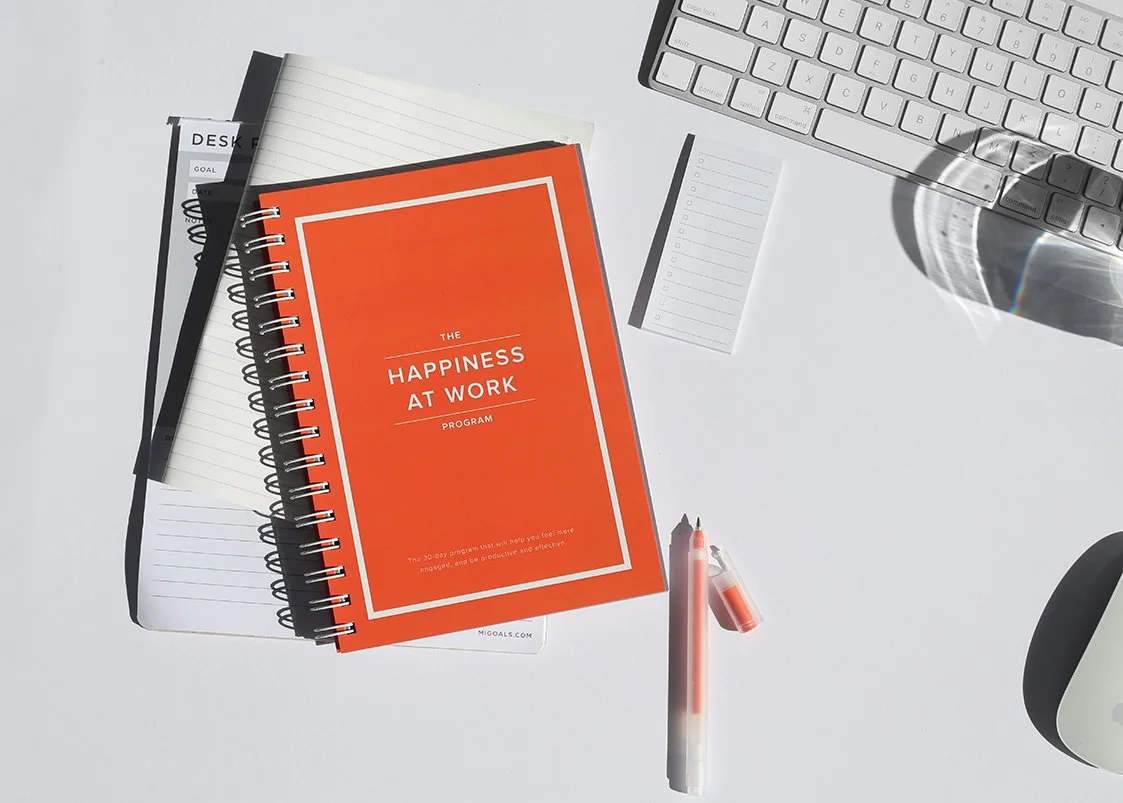
You know the expression “Happy Wife, Happy Life”? Well, workplaces aren’t wildly different.
Developed alongside psychologist Dr Tim Sharp, the Happiness at Work Program uses short daily prompts to help people notice more of the positive moments in their workday.
Over six weeks, these prompts help shift how people approach work - making them feel more positive, engaged and connected at work.
No forced fun. No trust falls. No one pretending to love a mandatory team-building activity on a Tuesday afternoon.
When the team’s happier, everything tends to run better - communication improves, customers feel the difference, productivity increases and the general vibe of the workplace becomes noticeably less “everyone quietly hanging on by a thread.”
What’s included:
printed participant workbooks
support and guidance for introducing the program
a Keep it Going Plan
card-format prompts for revisiting the program over time.
Sometimes the small things make the biggest difference.
The complete program, plus everything you need to run it.
$150 per person.
Because “let’s get everyone pizza” only works for so long.
No results match your search. Try removing a few filters.